Medical Marijuana in Florida: A Decade of Struggle, Triumph, and Persistent Barriers to Access
From Desperate Hope to Nearly One Million Patients
In 2014, a political battle played out across Florida that seemed unwinnable. Despite nearly 58% of voters supporting medical marijuana legalization, the measure failed—falling just short of the 60% supermajority required by Florida’s constitution. A powerful billboard campaign featuring the daughter of a Parkinson’s patient, opposition funding exceeding $5.5 million from Nevada casino magnate Sheldon Adelson, and entrenched institutional resistance created the impression that Florida would remain one of the last bastions of prohibition.
Yet just two years later, 71% of Florida voters would approve Amendment 2, fundamentally transforming the state and creating what is today the largest medical-only cannabis market in the United States. By 2026, nearly 930,000 Floridians held valid medical marijuana cards—representing approximately 4% of the state’s population and roughly one-quarter of all medical cannabis patients in America.
This is the untold story of how Florida became a leading force in medical cannabis despite starting from prohibition, and the persistent obstacles that continue to limit access for Floridians who need it most.
The Long Road to Amendment 2 (2013-2016)
The 2014 Heartbreak: 58% Support Wasn’t Enough
The journey toward legal medical marijuana in Florida began with personal tragedy. Kim Russell, founder of People United for Medical Marijuana (PUMFM), began legalization efforts after her father was diagnosed with Parkinson’s disease. With help from renowned Florida constitutional expert Jon Mills, a former Florida House Speaker and dean of the University of Florida College of Law, advocates gathered over 700,000 signatures to place Amendment 2 on the November 4, 2014 ballot.
The effort was bold and well-organized. A poll by Quinnipiac University showed 88% of Floridians supported legalization. John Morgan, head of the powerful Morgan & Morgan law firm, spent nearly $4 million in support. Even respected political figures acknowledged privately supporting the cause—former Florida State Senate President Don Gaetz had publicly admitted to helping loved ones access cannabis.
Yet despite 58% voting in favor, the measure failed. Florida’s 60% supermajority requirement—unique among constitutional amendment thresholds—became the barrier that would define the next two years.
The opposition campaign revealed the power of institutional resistance. Sheldon Adelson, a Las Vegas casino magnate and Republican mega-donor whose son had died from drug addiction, contributed $5.5 million to defeat the measure. Carol Jenkins Barnett, daughter of Publix supermarket founder George W. Jenkins, donated $800,000 to the opposition. Drug-Free Florida, the main opposition committee, spent over $700,000 on television advertising claiming “marijuana has no medicinal purposes.”
Sheriff Bill Prummel of Charlotte County articulated a concern that would echo throughout the opposition: “We will trade our pill mills for pot shops,” referring to Florida’s notorious prescription painkiller epidemic of the 2000s that had devastated communities before the state cracked down in 2011.
The Limited Option: 2014’s Compassionate Medical Cannabis Act
Even before the failed Amendment 2 vote, the Florida legislature had taken a narrow step. In June 2014, Governor Rick Scott signed the Compassionate Medical Cannabis Act (SB 1030), the first cannabis legalization in Florida history—though extremely limited in scope.
The law allowed only low-THC, high-CBD cannabis oil for patients with three specific conditions: epilepsy, cancer, and amyotrophic lateral sclerosis (ALS). It was branded around the “Charlotte’s Web” strain, a high-CBD variety that had gained attention for helping children with severe seizures.
While this represented a breakthrough—passing the House 111-7 and Senate 30-9 with overwhelming support—it was hardly what advocates envisioned. The program couldn’t address the vast majority of conditions and patients who might benefit from cannabis medicine. More fundamentally, it reflected a troubling pattern in cannabis policy: compassion extended only to the most sympathetic cases and dying patients, not to the broader spectrum of chronic pain, anxiety, and other debilitating conditions affecting millions.
2016: The Second Attempt That Finally Succeeded
Undeterred by the 2014 defeat, United for Care (the sponsoring organization) immediately began collecting signatures for another Amendment 2, this time with refined language designed to address objections to the 2014 proposal. The new version better specified qualifying conditions, included tighter oversight language, and added parental consent requirements for minors.
The Florida Supreme Court cleared the measure for the ballot on December 17, 2015. This time, the political landscape had shifted. The success of Colorado and Washington’s recreational legalization in 2012, and growing mainstream recognition of cannabis medicine, created a more favorable environment. Additionally, the intervention years since the pill mill epidemic had revealed that cannabis wasn’t creating the overdose crisis that opioids had—a realization that changed some minds.
On November 8, 2016, Florida voted decisively: 71% of voters approved Amendment 2.
Building Infrastructure from Scratch (2016-2019)
Implementation: The Mad Dash to Establish Systems
Amendment 2 took effect on January 3, 2017. The state had months to build an entire regulatory system from scratch—a task that would have been daunting under the best circumstances and proved chaotic under the actual timeline.
The Florida Department of Health’s Office of Medical Marijuana Use (OMMU) was created to:
- Register and track patients and caregivers
- License and regulate Medical Marijuana Treatment Centers (MMTCs/dispensaries)
- Establish testing standards
- Create application systems
- Train physicians in the certification process
The first registrations opened in January 2017, and demand was immediate and overwhelming. Within weeks, thousands of Floridians had applied for medical marijuana cards. The system, unprepared for this volume, struggled with processing delays, technical issues, and constant policy changes as legislators scrambled to implement the voter-approved mandate.
The Product Ban That Wasn’t
One of the first major controversies involved a legislative attempt to prohibit smoking. The legislature, concerned about respiratory health and the appearance of legalization rather than medical treatment, passed language forbidding smoked cannabis and limiting patients to oils, tinctures, edibles, and other non-smoked forms.
But patients and advocates challenged the ban in court. In a landmark May 2018 decision, Leon County Circuit Court Judge Karen Gievers ruled that the smoking ban violated Amendment 2’s terms, which protected patients’ access to “medical marijuana” without specifying that non-smoked forms only. This became the first of many legal victories that would expand patient access beyond the legislature’s initially narrow vision.
The Physician Bottleneck
From the beginning, a shortage of qualified physicians created access barriers. While the law allowed any licensed physician to recommend cannabis, many established doctors refused to participate, viewing cannabis as illegitimate medicine, fearing professional consequences, or simply lacking interest.
Cannabis became the domain of a cadre of physicians who specialized in the practice—many running high-volume practices that critics argued provided minimal medical oversight. While these practitioners expanded access dramatically, they also raised questions about thoroughness and individualization of care.
This physician bottleneck would prove to be a recurring theme throughout Florida’s program: access was never limited by patient demand or regulatory capacity, but by the willingness and availability of physicians to provide recommendations.
Early Growth: 2017-2019
Despite implementation challenges, the program expanded rapidly:
Patient Growth:
- January 2017: 13,000 registered patients
- January 2018: 245,000 patients
- January 2019: 330,000 patients
Dispensary Expansion: Early-approved operators—primarily Trulieve (first to open), MedMen, Surterra, and Curaleaf—rapidly built dispensary networks. The competition, while creating geographic access, also produced an arms race of expansion that would continue throughout the decade.
Product Diversity: Regulations gradually expanded to allow:
- Flower (buds/whole plant cannabis)
- Concentrates and extracts
- Edibles (gummies, baked goods, beverages)
- Tinctures and oils
- Topicals (creams and patches)
- Vaping products
The DeSantis Era and Accelerated Expansion (2019-2022)
The Smoking Victory and Expanded Access
When Ron DeSantis took office in January 2019, he inherited a growing cannabis program and a legislature increasingly comfortable with continued expansion. Early in his tenure, he signed HB 307 and other legislation that further expanded access, including formally permitting smoking.
The expansion of smoking access was significant not just for patients but as a political marker: even a conservative Republican governor, elected on law-and-order credentials, accepted cannabis as a legitimate medical option. This suggested that cannabis legalization had achieved a degree of political inevitability in Florida.
Subsequent legislation expanded qualifying conditions to include chronic pain—a change that opened access to hundreds of thousands of additional patients with back pain, arthritis, fibromyalgia, and other pain conditions. This 2019 expansion roughly doubled the potential patient population.
Explosive Growth: The Road to Half a Million Patients
The 2019-2020 period saw explosive growth:
By 2020:
- 430,000 registered patients
- 300+ medical marijuana treatment centers
- Approximately $890 million in annual sales
By 2021:
- 600,000 registered patients
- 400+ treatment centers
The growth reflected several factors:
- Expanded qualifying conditions (especially chronic pain)
- Improved accessibility (more dispensaries, physician availability)
- Changing social stigma around cannabis
- Marketing by cannabis operators reaching target demographics
Notably, demographic data from surveys showed the patient base was predominantly middle-aged and older (average age 55+), with women slightly outnumbering men (roughly 59% women, 41% men). This patient profile—not young recreational users but middle-aged people with chronic conditions—validated the “medical” framing of the program.
The COVID-19 Acceleration
The COVID-19 pandemic had an unexpected impact on Florida’s medical cannabis program. As lockdowns restricted activities and anxiety increased, cannabis sales surged. Additionally, cannabis businesses were deemed “essential services” and remained open during lockdowns, further normalizing the industry and giving the program continued visibility and access throughout 2020-2021.
This period would later be recognized as the inflection point where medical cannabis transitioned from controversial reform to normalized, mainstream medicine in Florida.
The Plateau Begins (2023-2025)
The Push for Recreational Legalization
By 2023, Florida’s medical cannabis program had proven successful by almost any measure: massive patient population, robust sales, established regulatory framework, and broad public support. This success created momentum for the next step: adult-use recreational legalization.
In August 2022, Smart & Safe Florida began collecting signatures for Amendment 3, proposing legalization for recreational use for adults 21 and older. The initiative echoed similar movements in other states and represented natural policy progression.
By June 2023, organizers had submitted 967,528 valid signatures—more than the 891,523 required. The ballot initiative appeared certain for the 2024 election.
The 2024 Amendment 3 Defeat: A Shocking Rejection
When the November 2024 election arrived, 56% of Florida voters supported Amendment 3—a clear majority expressing support for legalization. Yet the 60% supermajority requirement struck down the measure again.
The defeat was stunning given that:
- A clear majority of Floridians supported legalization
- The campaign had been well-funded and organized
- Medical legalization had been successful and popular
- Public opinion nationally had shifted dramatically toward legalization
The 60% supermajority requirement—unchanged since 1968—became the primary barrier to reflecting Florida voters’ actual preferences. Critics argued the supermajority threshold was an anti-democratic relic designed to make constitutional change artificially difficult, effectively allowing a minority to thwart the majority’s will.
The defeat had immediate consequences for the cannabis industry. Multiple operators had expanded dispensaries in anticipation of legalization. The failure to pass recreational legalization meant these expanded footprints served only the existing medical market, creating oversupply and profit pressure.
Market Slowdown and Consolidation
By 2024-2025, the Florida medical cannabis market showed signs of maturation and strain:
Patient Growth Deceleration:
- 2023: 720,000 patients
- 2024: 850,000 patients
- 2025: 930,000 patients (by year-end)
While these numbers represent growth, the percentage growth rate had declined significantly from earlier years. The pool of “movable middle” patients—those who wanted access and were able to navigate the system—had largely enrolled.
Dispensary Expansion: Paradoxically, dispensary counts continued rising:
- 2023: 650+ dispensaries
- 2024: 702 dispensaries
- 2025: 735 dispensaries
This represented oversupply: more retail locations serving a slower-growing patient base.
Sales and Revenue Challenges:
- 2025 showed volatile monthly growth, ranging from -6.8% to +17.2% year-over-year
- Q3 2025 sales were essentially flat compared to Q3 2024
- Cannabis operators’ stock values declined significantly following the failed legalization initiative
The Emergence of Hemp-Derived THC Products: A significant wildcard in the market was the rise of hemp-derived THC products—cannabis products with THC derived from federally legal hemp rather than marijuana. These products created an unregulated alternative to medical cannabis, siphoning sales and creating regulatory chaos.
Governor DeSantis in 2024 vetoed legislation attempting to ban hemp-derived products, preventing a state-level solution to the problem. The underlying issue—a federal hemp loophole created by the 2018 Farm Bill—created regulatory arbitrage where hemp-derived products could operate in gray legal zones.
The Access Crisis Hidden by Large Numbers
What 930,000 Patients Doesn’t Tell You
While Florida’s nearly one million registered medical marijuana patients represent a success story, behind this number lies a more complex reality: access remains unequal, incomplete, and insufficient for many Floridians who could benefit from cannabis medicine.
The Physician Shortage Paradox
Despite ten years of legalization, the number of qualified physicians had not grown proportionately to patient demand. Research showed:
- Certified physicians remained concentrated in a small number of high-volume practices
- Most traditional medical establishments (hospitals, academic centers, major primary care networks) remained absent from the program
- Patients had limited continuity of care and minimal integrative relationship between cannabis recommendations and broader medical care
This physician shortage created numerous barriers:
- Long waits for appointments (sometimes weeks or months)
- Limited ability for physicians to provide thorough medical evaluations
- Geographic access issues (some rural areas remained underserved)
- Inability for most primary care physicians to recommend cannabis, forcing patients to seek specialists to obtain physician recommendations
The Employment and Discrimination Problem
A critical untold story involves employment discrimination. While Florida’s medical marijuana program protected patient access, it did not protect patients from employment discrimination. Unlike many medical conditions covered by the Americans with Disabilities Act, cannabis patients could be:
- Terminated from employment
- Denied employment based on positive drug tests
- Charged with child neglect for use in parental custody disputes
Multiple bills introduced to address these injustices failed to even receive committee hearings:
- S 0776: Would have allowed medical patients to cultivate up to 6 plants for personal medical use (failed)
- S0130/H1061: Would have protected parents from child neglect charges based on cannabis card status (failed)
- S0136/H0689: Would have provided employment protections for workers with medical marijuana cards (failed)
The legislature, despite presiding over a successful program, declined to pass common-sense protections that other medical cannabis states had implemented. This created a situation where legal patients could face serious legal and employment consequences for legal medicine.
Home Cultivation: Still Prohibited
Ten years after legalization, Florida medical marijuana patients still cannot grow their own medicine. Unlike 24 other states with medical programs, Florida requires all cannabis to come from licensed, regulated treatment centers. This creates several problems:
- Cost barriers: Legally purchased cannabis costs significantly more than home cultivation in other states
- Accessibility issues: Some patients live far from dispensaries
- Patient autonomy: Growing one’s own medicine provides patients with control over strain selection, cannabinoid ratios, and product quality
- Medication access: Patients without nearby dispensaries, or those with financial constraints, remain unable to access medication
The failed Amendment 3 included home cultivation, a major reason some patients opposed recreational legalization—they wanted to grow their own medicine. Even with the broader legalization failing, the legislature refused to grant home cultivation for medical patients despite patient advocacy.
Equity and Demographic Access Issues
While Florida’s program included nearly one million patients, access remained unequal:
Demographic Disparities:
- Patient population was predominantly older, middle-class, and white
- Hispanic and Black communities, while representing substantial portions of the patient population, were underrepresented relative to their share of the population
- Research showed that “race and ethnicity significantly impact menopause symptom presentation with Black individuals at higher risk for vasomotor symptoms,” yet this population remained underserved in cannabis medicine consultation
Financial Barriers:
- Without insurance coverage, patients typically paid cash for cannabis ($12-20+ per gram for flower, higher for concentrates)
- No subsidies existed for low-income patients
- The lack of insurance coverage reflected federal prohibition and lack of insurance code options for cannabis
Geographic Access Issues:
- While most of Florida had dispensaries, rural areas had fewer options
- Some regions were underserved relative to demand
- Travel distance remained a barrier for disabled patients with transportation limitations
The Clinical Evidence Gap
A Medical Program Without Adequate Medical Research
Despite ten years of legalization and nearly one million patients, Florida’s program developed with remarkably limited clinical research and medical oversight.
The Research Gap:
- No major academic medical centers in Florida had active clinical research programs examining cannabis for specific indications
- The University of Florida and University of Miami, major research institutions, remained largely absent from cannabis medicine research
- No statewide database tracked clinical outcomes or side effects in an organized way
- Patient surveys and observational studies existed, but controlled clinical trials remained sparse
The Consortium Response: By 2024, the Consortium for Medical Marijuana Clinical Outcomes Research (CMMCOR) at the University of Florida attempted to address this gap, but funding remained limited and enrollment in research studies remained far below the scale needed.
This created a situation where Florida had more cannabis patients than any other state but less clinical knowledge about what they were using cannabis for and whether it was actually helping.
The 2024 Defeat and Looking Forward to 2026
Shock and Recalibration
The November 2024 election, in which recreational legalization was supported by 56% of voters but failed to reach 60%, created shock throughout Florida’s cannabis industry and reform movement. Operators had built supply chains and dispensary networks in anticipation. Investors who had bet on legalization saw stock values plummet.
For patients and advocates, the failure represented a more fundamental frustration: the supermajority requirement allowed a minority to thwart the majority’s will.
The 2026 Ballot Effort
In response, Smart & Safe Florida immediately launched signature collection for a 2026 ballot initiative. The campaign submitted 1.4 million signatures—well above the 880,000 required. However, the state’s approval process found only 793,000 signatures valid, denying the ballot initiative a place on the 2026 ballot.
Critics charged that the state’s verification process was unnecessarily strict or even manipulated to prevent legalization. The failure to get on the 2026 ballot meant that legalization was no longer an option for the 2026 election, despite clear evidence of majority support.
Legislative Inaction
Simultaneously, the Florida legislature’s inability to advance even modest cannabis reforms in 2025 and early 2026 highlighted a broader problem: legislative gridlock on cannabis policy.
Bills that would have:
- Allowed home cultivation for patients
- Protected patients from employment discrimination
- Protected parents from custody loss based on cannabis use
- Provided other common-sense protections
…received no committee hearings and died without debate.
Why This Story Matters—And What’s Untold
The Untold Parts of the Story
The conventional narrative celebrates Florida’s medical cannabis program: 930,000 patients, $890 million in annual sales, access that was impossible a decade ago. This narrative is not wrong—legalization is real, access is available, and patients have genuinely benefited.
But the untold story includes:
Systemic Access Barriers Despite legalization, access remains difficult for:
- Low-income patients (who face cost barriers)
- Rural residents (geographic access issues)
- Patients with mobility limitations (unable to travel to dispensaries)
- Patients who need integrated care from informed primary physicians (most of whom remain absent from the program)
The Structural Power of Supermajority Requirements The 60% supermajority requirement—described by legal scholars as anti-democratic—allows a minority to thwart policy change. In 2014, 58% supported legalization and it failed. In 2024, 56% supported recreational legalization and it failed. Florida voters, when given a clear choice on cannabis policy, favor legalization—but the structure prevents their will from being enacted.
Industry Concentration While numerous dispensaries exist, the wholesale cannabis supply is controlled by a small number of major operators: Trulieve (largest), MedMen, Surterra, Curaleaf, and a few others. This concentration creates:
- Limited consumer choice at the cultivation and wholesale level
- Standardized products
- Market power that limits innovative new entrants
- Questions about whether true competition and innovation can emerge
The Employment and Legal Jeopardy Patients legally holding medical cards can still face:
- Job termination for positive drug tests
- Custody loss in family courts
- Criminal prosecution (especially for any cannabis transport outside their home)
- Housing discrimination
This creates legal jeopardy for patients exercising legal rights.
The Missing Role of Mainstream Medicine Medical schools, teaching hospitals, and major primary care networks have remained largely absent from cannabis medicine. This has consequences:
- Cannabis recommendations come from specialists, not primary physicians
- Integration with conventional medical care is limited
- Training of future physicians in cannabis medicine is minimal
- Mainstream medicine’s absence lends itself to continued stigma
What a Complete Story Would Include
A fuller understanding of Florida’s medical marijuana program would acknowledge:
- The real improvement in access and patient benefit
- The persistent barriers that limit access to privileged populations
- The structural obstacles to further reform (supermajority requirements, federal prohibition, institutional resistance)
- The industry consolidation occurring despite multiple dispensaries
- The gap between patient demand for legalization and legislative capacity to respond
- The lessons for other states considering similar programs
The Miami Cannabis Medicine Perspective: Dr. Fernando Fandiño-Sende on a Decade of Change
A Physician’s View of Evolution
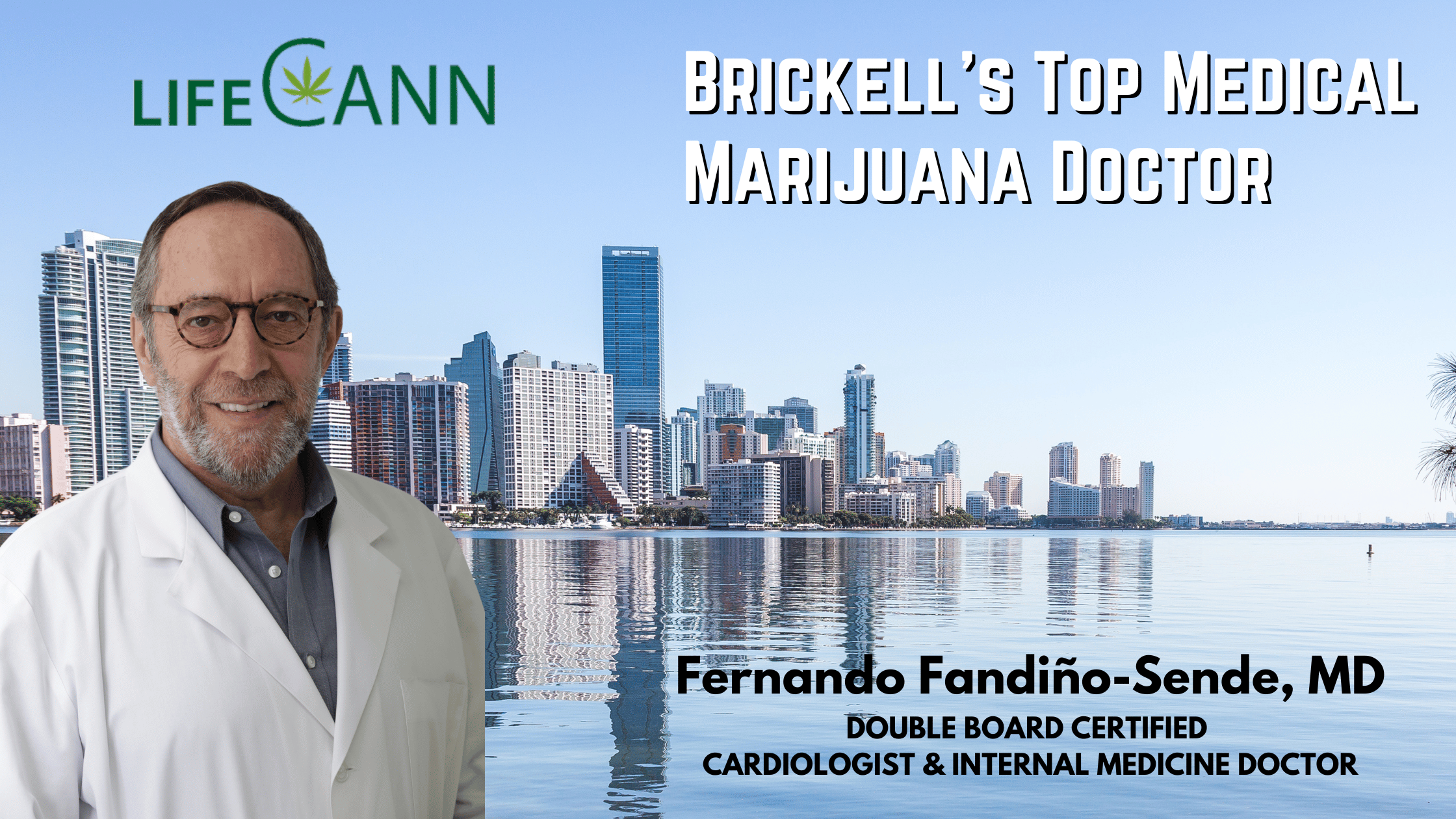
Dr. Fernando Fandiño-Sende, with dual board certification in cardiology and internal medicine, has observed Florida’s medical cannabis program from its early days through 2026. His perspective as a board-certified cannabis medicine specialist offers important insight into how the program has evolved from physician perspective.
“When Amendment 2 passed in 2016, most physicians didn’t know what to do,” Dr. Fandiño-Sende reflects. “The regulatory guidance was minimal. Training was non-existent. Many physicians had been trained to view cannabis as a substance of abuse, not medicine. It took years for the medical community to shift perspectives.”
What changed? According to Dr. Fandiño-Sende, patient demand and observable clinical benefit eventually overcame institutional skepticism.
“I began recommending cannabis initially with some hesitation,” he explains. “But when I saw a patient with chronic pain become functional again after cannabis recommendation, or an anxious patient find relief without the side effects of benzodiazepines, I realized this was real medicine.”
Yet challenges remain. “The physician bottleneck is real,” Dr. Fandiño-Sende notes. “Most primary care physicians still won’t recommend cannabis. Most hospital systems don’t allow their physicians to participate. This creates a situation where medical cannabis is practiced on the margins of medicine rather than integrated into mainstream care.”
LifeCannMD’s approach—comprehensive medical evaluation, integration with other health conditions, ongoing monitoring, and emphasis on evidenced-based recommendation—represents what mainstream cannabis medicine could look like if the institutional barriers were removed.
Lessons for Other States—And for Florida’s Future
What Works
Florida’s experience shows that:
- Medical cannabis can be regulated successfully through a licensing system with quality controls
- Large patient populations can be served through a network of dispensaries without the “pill mill” chaos that feared
- Medical cannabis genuinely helps patients reduce symptoms and improve function (as evidenced by the retention and satisfaction of patients)
- Public opinion shifts when legalization proves successful (71% supported legalization in 2016, and support remained high)
What Doesn’t Work
Florida’s experience also demonstrates:
- Physician gatekeeping limits access when mainstream physicians refuse to participate
- Supermajority requirements prevent democratic will from being enacted (twice, voter majorities were blocked by the 60% threshold)
- Federal prohibition undermines state law by preventing banking, insurance, and employment protections
- Industry consolidation can occur in regulated systems if there are barriers to entry and operational scale advantages
- Equity and access don’t happen automatically—they require affirmative policies
- Home cultivation bans reduce access for patients who cannot or will not use dispensaries
The Path Forward
For Florida and other states, the untold story of medical marijuana legalization suggests several priorities:
Integrate Medical Cannabis into Mainstream Medicine
- Fund academic research at major universities
- Require cannabis medicine training in medical schools
- Create incentives for primary care physicians to participate
- Integrate cannabis records with electronic medical records systems
Protect Patient Rights Beyond Medical Access
- Eliminate employment discrimination
- Protect parental custody rights
- Allow home cultivation for medical patients
- Provide insurance coverage or subsidies for low-income patients
Address Democratic Process Barriers
- Change supermajority requirements to reflect actual democratic will
- Ensure ballot access isn’t arbitrarily restricted
- Allow legislative bodies to implement popular policy changes
Ensure Equity in Access
- Address geographic access disparities
- Provide subsidized access for low-income patients
- Actively recruit diverse physicians to the program
- Study and address demographic disparities in access
Ten Years Later, the Untold Story Continues
In November 2014, Florida’s medical marijuana legalization failed by 2 percentage points. Supporters were devastated. Industry observers said legalization was years away. The conventional wisdom held that prohibition would persist.
Two years later, 71% of Floridians voted to overturn that prohibition. A decade later, nearly one million Floridians hold medical cards and purchase cannabis from more than 700 dispensaries. The feared “pot shop” chaos and diversion to illegal markets didn’t materialize. The program has proven stable, regulated, and genuinely beneficial for patients.
Yet the untold story—the one beyond the impressive statistics—involves persistent barriers, incomplete access, democratic obstacles, and an industry that remains concentrated and largely separate from mainstream medicine.
As Florida looks toward future cannabis policy (potential 2026 recreational legalization, home cultivation advocacy, expanded physician participation), the lessons of the past decade suggest that legalization alone isn’t enough. True reform requires integration into medical institutions, protection of patient rights, equitable access policies, and democratic structures that reflect majority preferences.
The story of medical marijuana in Florida isn’t finished. But understanding the ten years that have passed—the real victories and the persistent barriers—is essential to charting a better path forward.
Your Medical Cannabis Consultation Awaits
If you’re a Florida resident navigating the medical marijuana program—whether newly considering it or a long-time patient seeking better integration with your healthcare—Dr. Fernando Fandiño-Sende at LifeCannMD is ready to provide comprehensive consultation that treats cannabis as a serious medicine within a full medical context.
With a decade of program evolution behind us, board-certified physicians who understand both medical cannabis and systemic health conditions are increasingly important. LifeCannMD brings this comprehensive approach to Miami-area patients.
LifeCannMD: Integrating Cannabis Medicine into Mainstream Healthcare
- Location: Miami, Florida
- Specialist: Dr. Fernando Fandiño-Sende, MD
- Credentials: Double Board-Certified Cardiologist & Internal Medicine Specialist
- Focus: Evidence-based medical cannabis consultation within comprehensive medical care