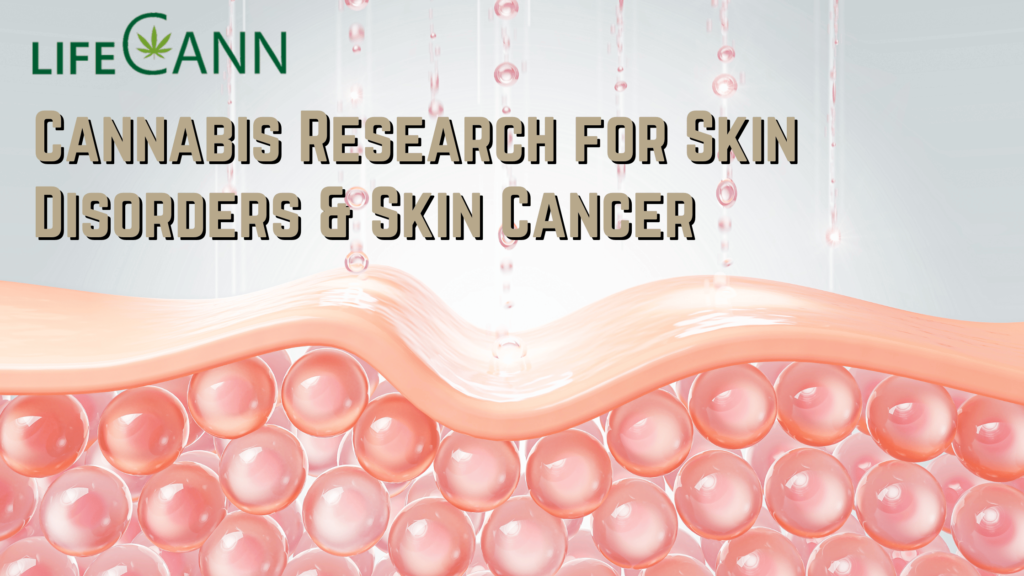
Cannabis has been increasingly studied for its potential therapeutic benefits in various medical conditions, including skin disorders and skin cancer.
Cannabinoids, particularly cannabidiol (CBD), have shown anti-inflammatory effects that can be beneficial for skin conditions such as acne, psoriasis, and eczema. Inflammation plays a significant role in these conditions, and cannabinoids, like CBD, can help reduce this inflammation. CBD has been found to reduce sebum production, which can help manage acne. By balancing the production of oils in the skin, CBD can prevent the clogging of pores that leads to acne formation.
Studies suggest that cannabinoids may help manage psoriasis and eczema by interacting with the endocannabinoid system to regulate skin cell growth and immune responses. The anti-inflammatory and immunosuppressive effects of cannabinoids can alleviate symptoms like itching, redness, and irritation.
Research has indicated that cannabinoids might have antitumor properties. Some studies have shown that cannabinoids can induce apoptosis (programmed cell death) in cancer cells, including skin cancer cells, and inhibit their proliferation.
Cannabinoids like THC and CBD have been studied for their potential to treat both melanoma and non-melanoma skin cancers. They may inhibit the growth of cancer cells and reduce their ability to spread. There is growing interest in the use of topical cannabinoid formulations for skin cancer treatment. These formulations allow for direct application to affected areas, potentially reducing systemic side effects.
Cannabinoids exert their effects primarily through the endocannabinoid system, which includes cannabinoid receptors (CB1 and CB2) found throughout the body, including the skin. By binding to these receptors, cannabinoids can influence various physiological processes such as inflammation, cell proliferation, and apoptosis.
One particular cannabis concentrate that has been gaining attention in the realm of skin cancer treatments is Rick Simpson Oil (RSO), a concentrated form of cannabis oil that was developed by Rick Simpson, a Canadian medical marijuana activist. RSO is typically made from Cannabis indica strains and contains high levels of tetrahydrocannabinol (THC). It has gained attention for its potential therapeutic effects, particularly in the context of cancer treatment, including skin cancer, and other skin disorders. RSO primarily exerts its effects through the endocannabinoid system, which involves cannabinoid receptors (CB1 and CB2) found in the skin. THC binds to these receptors, influencing various physiological processes such as cell proliferation, differentiation, and apoptosis. Additionally, cannabinoids modulate inflammatory pathways, which can be beneficial in both cancer and inflammatory skin conditions.
RSO has been reported to have antitumor properties. Some anecdotal evidence and preclinical studies suggest that THC, the primary cannabinoid in RSO, can induce apoptosis (programmed cell death) in cancer cells, including skin cancer cells. This can potentially inhibit the growth and spread of tumors.
There are anecdotal reports of individuals using RSO to treat both melanoma and non-melanoma skin cancers. While these reports are promising, scientific evidence from rigorous clinical trials is still lacking. Some in vitro and animal studies indicate that cannabinoids can reduce the viability of cancer cells and limit their proliferation.
RSO is often applied topically to the skin over the affected area. This localized application allows for high concentrations of cannabinoids directly at the site of the tumor, potentially reducing systemic side effects. Some users report shrinking tumors and relief from symptoms after consistent application.
Cannabis holds potential as a treatment for various skin conditions and skin cancer, primarily due to its anti-inflammatory and antitumor properties. While preclinical studies are promising, more extensive clinical trials are needed to fully understand the therapeutic potential and safety of cannabinoids for skin disorders and skin cancer.